Keaghan Paterson · Mechanical design
Can I make a robot Juggle-solve Rubik's cubes?
- Started April 2026. Work in progress.
- Done: vision scanner, solver, digital twin + grasp policy, all parts printed.
- Next: servos arrive → assemble → sim-to-real → juggle.
- Juggle ✅
- Solve ✅
- Juggle-solve ❌
- Juggle (definitely)
- Solve (definitely)
- Juggle-solve (????)
Physical build
Open-Source DexHand V2.0
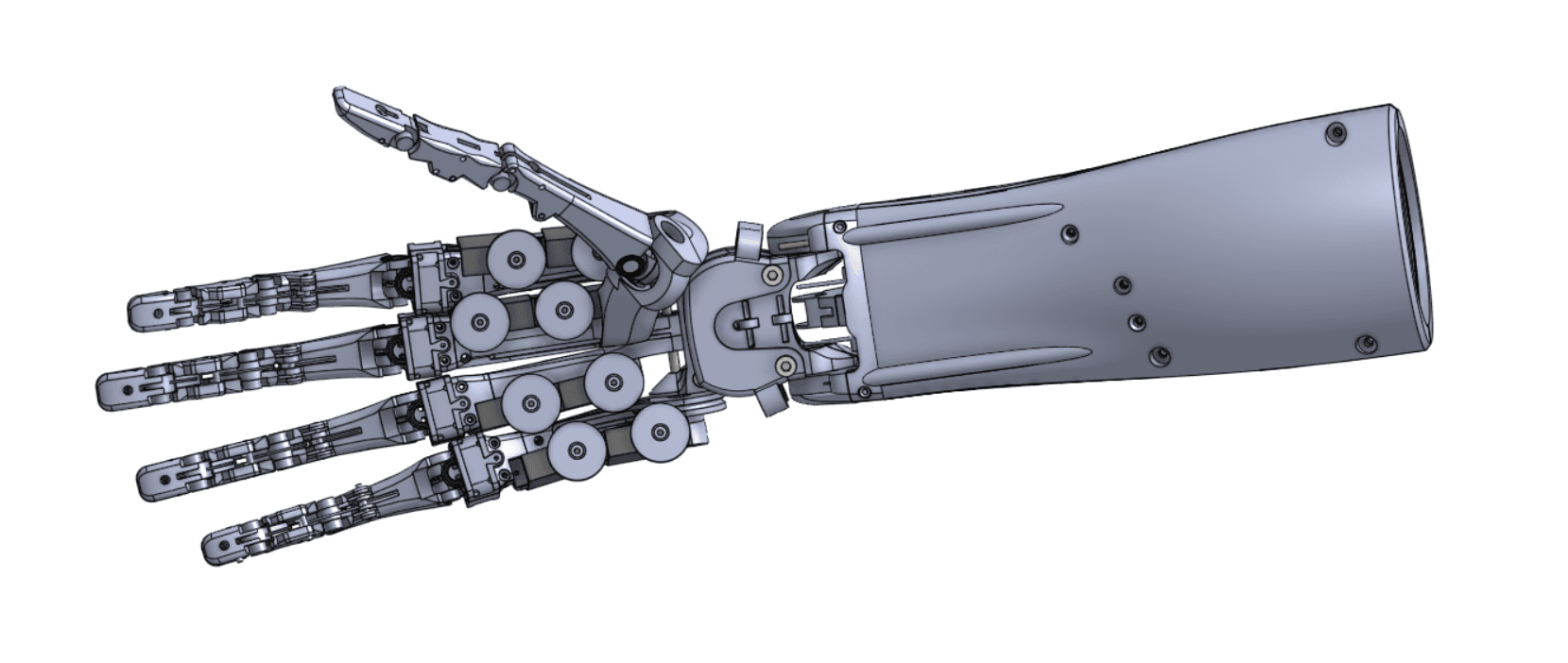
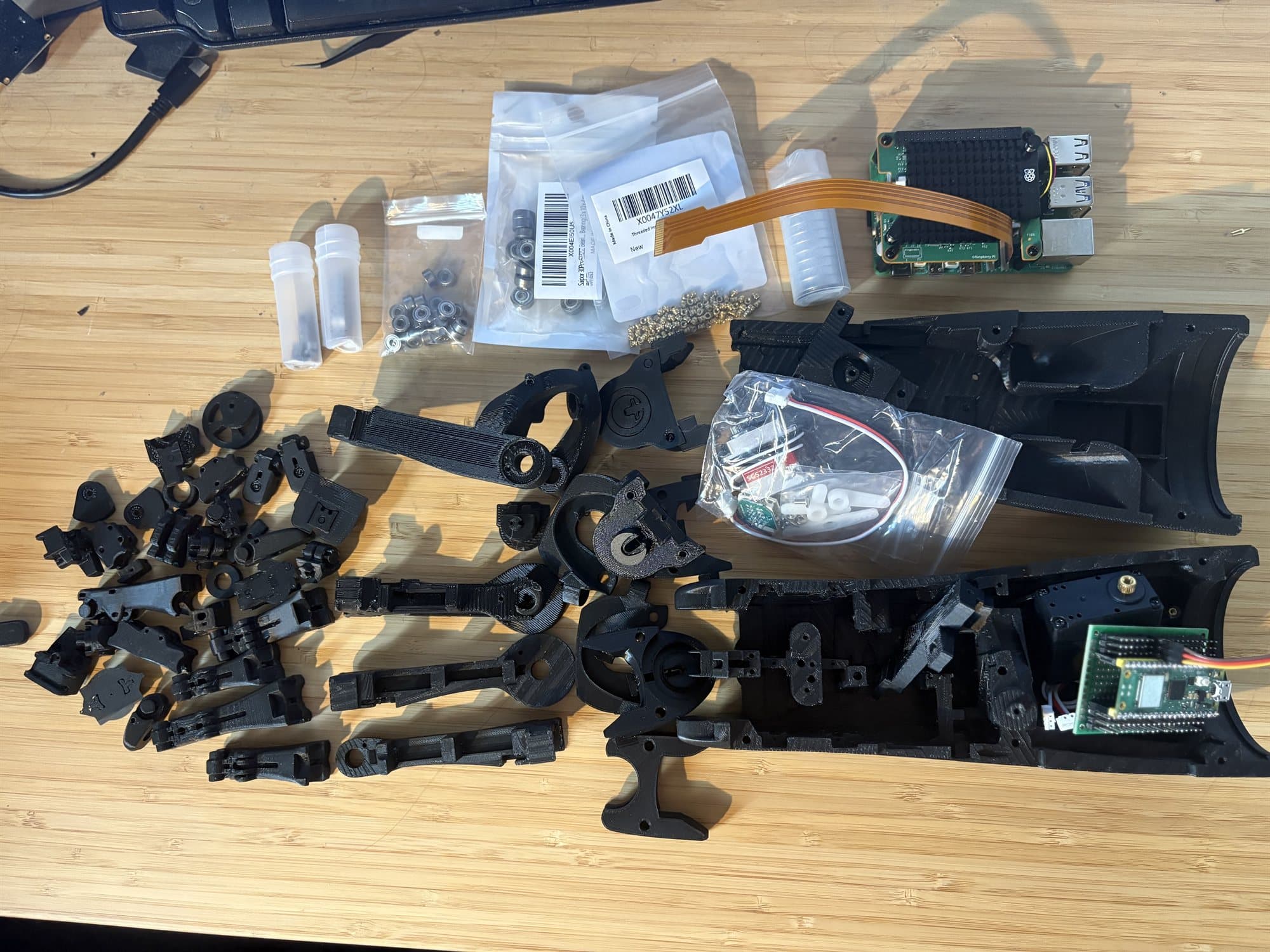
Solver
Photograph the cube → read the state → solve it. Works on different cubes and in different lighting.
- Photograph the six faces on a phone.
- The scanner finds all 54 stickers and reads their colours.
- The solver returns the solve move list in milliseconds.
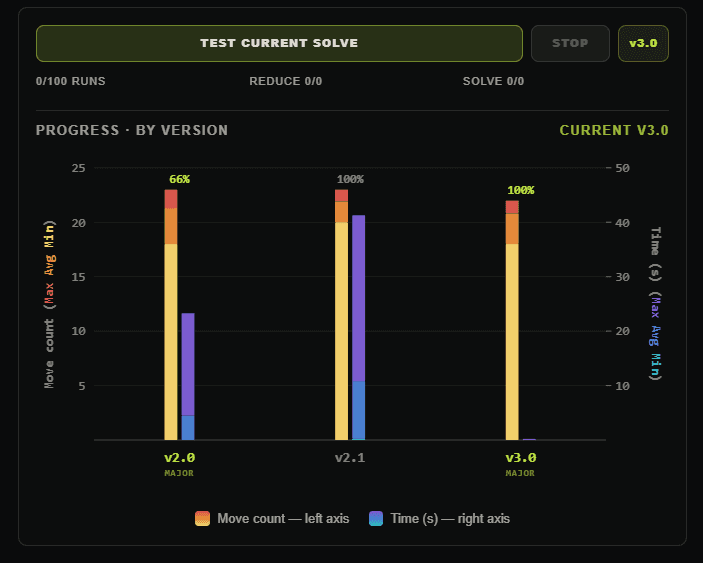
- Solve rate: 100%
- Time to solve: 21 ms average
- Moves: 20.8 average
- 100 scrambles of 25 moves, the same set for every version.
Control system
Digital-twin built from physics, trained with Isaac lab and Isaac Sim.
- The hand teaches itself to spin the cube to any goal pose, in Isaac Sim + Isaac Lab.
- Reward functions do the teaching: points for rotating the cube toward the goal, penalties for letting it fall off the palm.
- After 5,000 practice episodes it reaches about 11 goal poses in a row, at 90% success.
- You may spot the odd accidental face rotation — the sim cube has a real turning face, not a solid block.
Work in progress
- Fingertip force sensing: custom PCBA, schematic and layout in progress.
- Sim → real: move the trained policy onto the real hand.
- Two hands, three cubes: second hand, then juggling.