KP.Keaghan Paterson home

MECH 496 · Team 9

Are carbon-plated running shoes worth it?

Keaghan Paterson, Megan Lawson, James Griffin

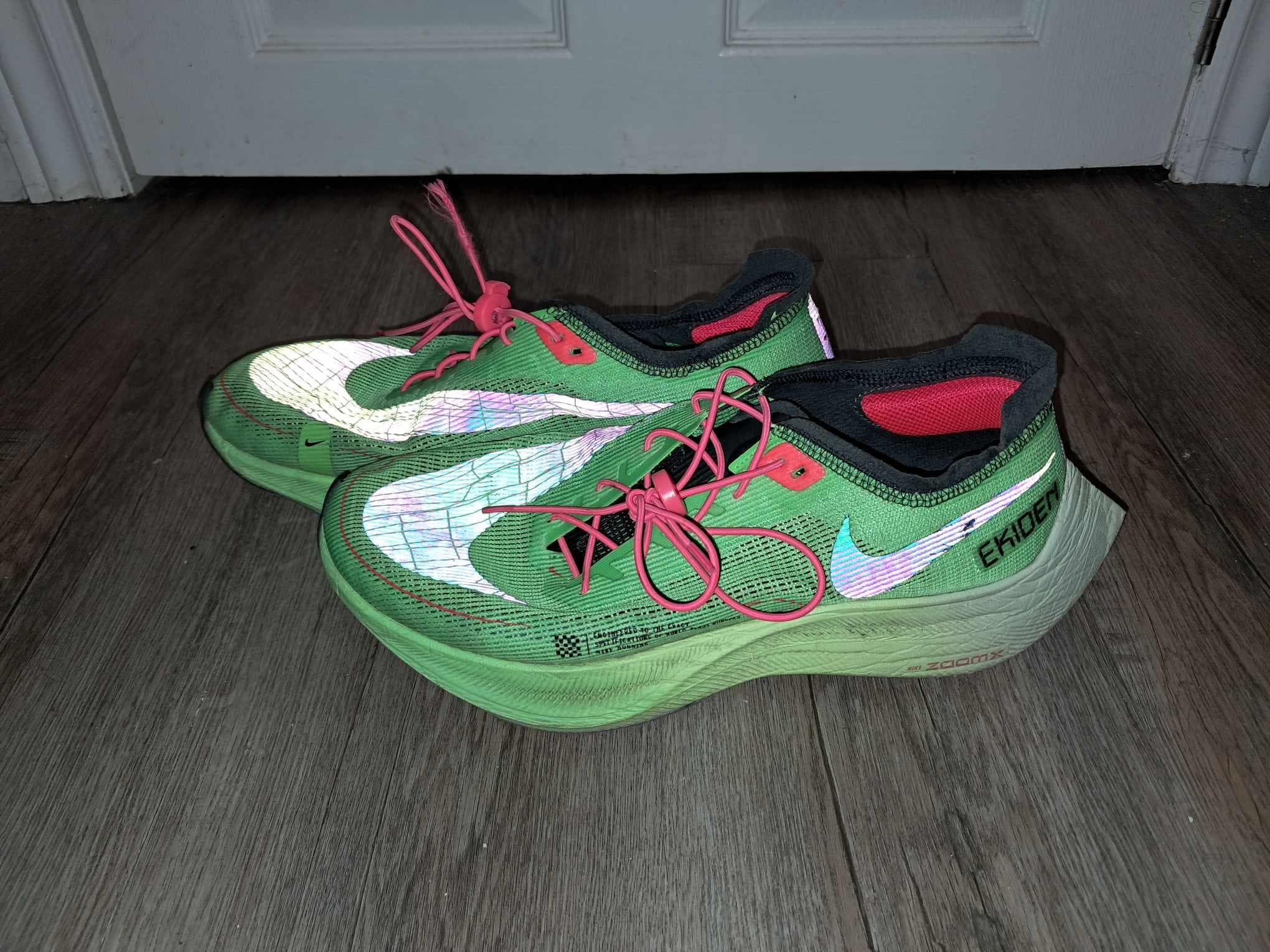
Standard athletic shoesSpecialized carbon-plated racing shoes
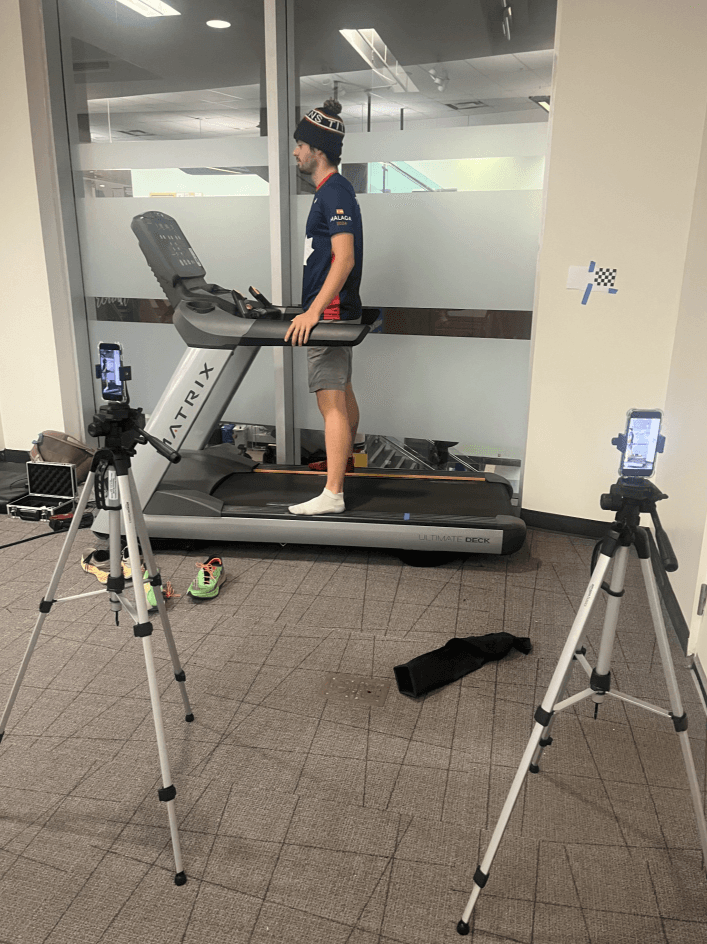
Treadmill and two camera motion capture system

02 / 06

Experiment Method

  • 13 test subjects with the same shoe size (10-11 men's).
  • Each subject ran on a treadmill for three 30-second trials:
    • One barefoot,
    • One standard athletic shoe
    • One specialized racing shoe
  • Two camera motion capture system
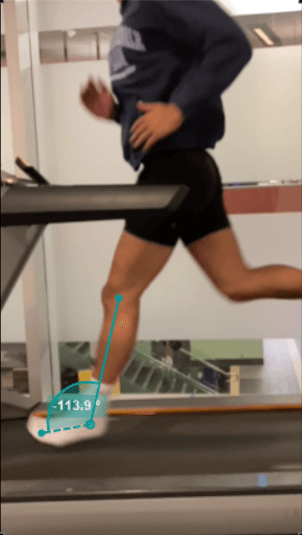
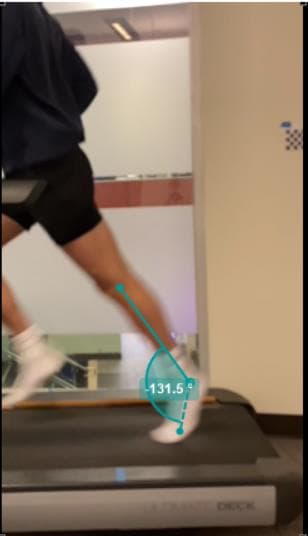
  • Data analyzed in Opensim and Kinovea

03 / 06

Variables Analyzed

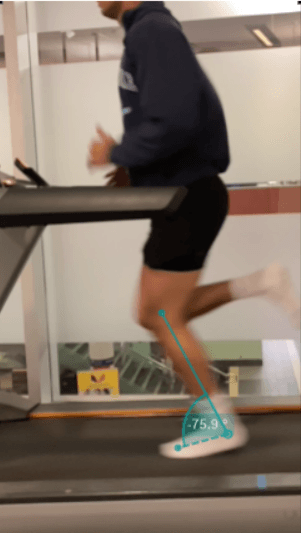
Ankle at landing
Ankle at landing
Ankle at push-off
Ankle at push-off
Minimum ankle angle
Minimum ankle angle
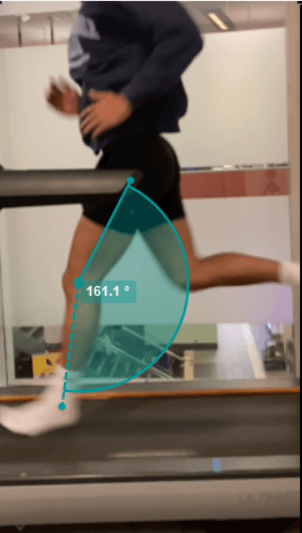
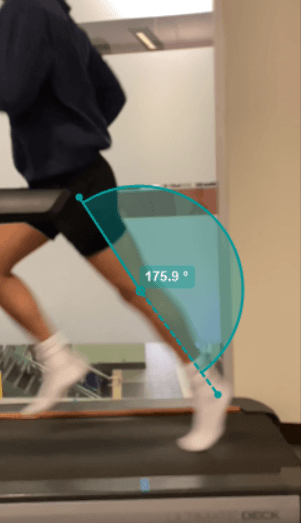
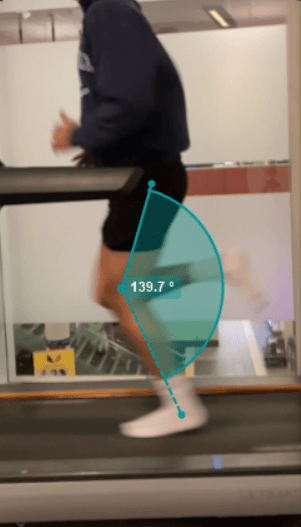
Knee at landing
Knee at landing
Knee at push-off
Knee at push-off
Minimum knee angle
Minimum knee angle

04 / 06

Three 30-second trials

Camera 1
Camera 2
OpenSim analysis

05 / 06

Results

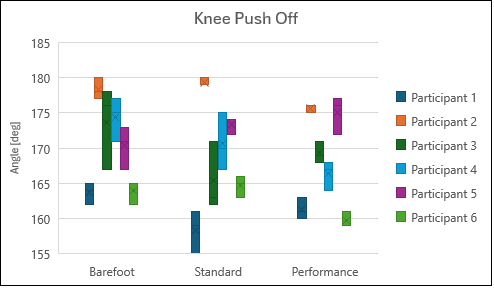
Comparison among participants
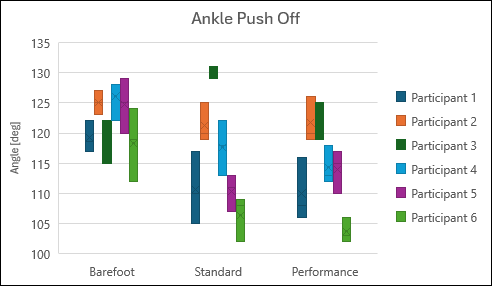
Ankle Push Off
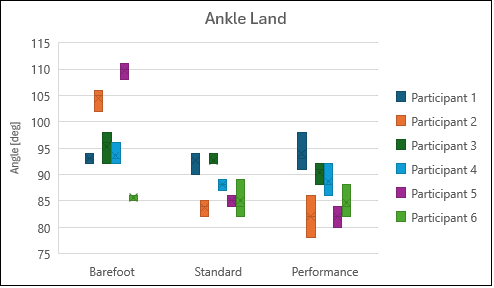
Ankle Land
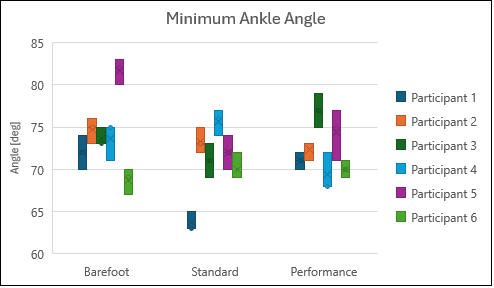
Minimum Ankle Angle
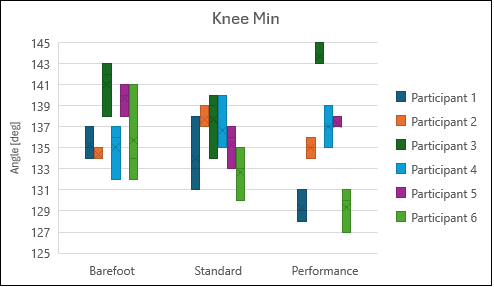
Knee Min
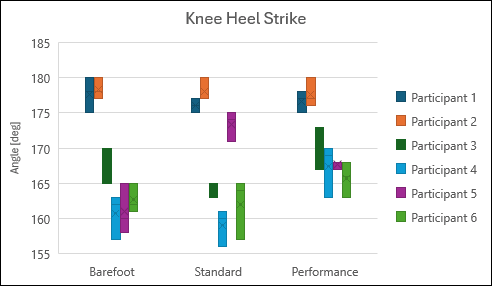
Knee Heel Strike
Knee Push Off

06 / 06

Conclusions

  • Performance and standard running shoes have no statistical differences between ankle angles
  • Performance and standard running shoes cause statistically different minimum knee angles
    • Mean is nearly identical
    • Standard deviation is much higher for performance running shoes
  • Because smaller minimum knee angles correlate with more efficient running [3], the shoes are worth purchasing on a case-by-case basis only for individuals who see an angle decrease
  • There is no statistical difference for injury risk between standard and performance shoes
  • Consensus among runners was that the performance shoes were more comfortable, introducing an alternative reason for runners to consider purchasing.